


Based on an interview with Boaz Nitzan, CEO and Owner of Raz Management & Engineering, hosted by Dafna Shahar (TheMarker)
Complex office relocations and large-scale fit-out projects rarely fail because of a single mistake. They fail when budgets drift, schedules slip, and quality becomes a negotiation rather than a standard. In a recent interview hosted by Dafna Shahar for TheMarker, Boaz Nitzan, CEO and owner of Raz Management & Engineering, explained how an integrated Design-Build approach can reduce uncertainty and give clients clearer control over outcomes.
For global companies establishing or expanding operations in Israel, this promise is especially relevant. The combination of tight timelines, complex permitting, imported systems, and multi-disciplinary coordination often creates friction that traditional, fragmented delivery models struggle to absorb. Nitzan argues that the answer is not more vendors, but more responsibility.
Watch the full interview: (כאן ייכנס הלינק מהיוטיוב שלנו)
A Top-Tier Project Management Firm With Three Core Specialties
At the outset, Boaz Nitzan framed Raz Management & Engineering as a top-tier project management player with more than 20 years of experience, focused on three primary channels.
1) Office Fit-Out, From Due Diligence to Occupancy
The first specialization is office fit-out and complex workplace delivery. Nitzan described a process that begins before design even starts, with due diligence.
The team evaluates whether a building truly fits the end user’s requirements, then assembles the full consultant team and leads the project through planning, detailed design, and a full bill of quantities. From there, Raz Management & Engineering manages tendering, builds comparison tables, selects the most qualified general contractor, and supervises execution through completion, including the full set of authority approvals required for legal occupancy.
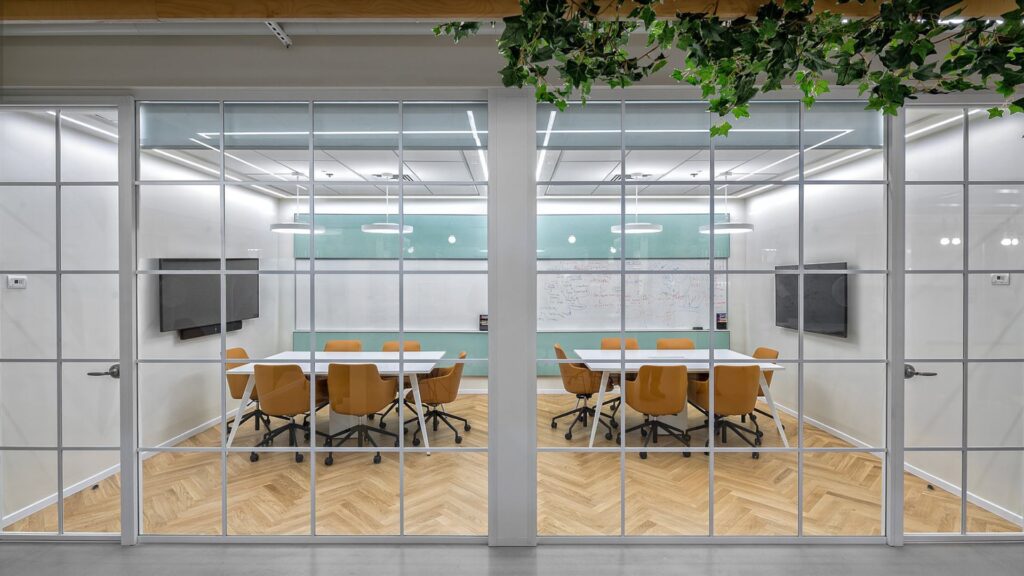
Many of Raz Management & Engineering’s clients are international, and Boaz Nitzan emphasized that these clients often prefer a “One Purchase Order” structure. In practice, this means a single contract with Raz Management & Engineering, with all consultants, contractors, and suppliers operating under Raz Management & Engineering’s umbrella. Raz provides the required bank guarantees and insurance, and serves as the single point of responsibility throughout the project.
Beyond delivery, Nitzan added that the company typically provides a 12-month inspection period. If issues arise, the client does not chase multiple parties. They raise the flag to one focal point, and Raz Management & Engineering manages resolution.
2) Data Centers, Tier 3 and Tier 4 Redundancy With Zero Downtime Expectations
The second channel is data centers, in Israel and abroad. Boaz Nitzan described projects delivered to Tier 3 or Tier 4 standards, built around full redundancy and “no downtime” requirements. Power, HVAC, generators, and UPS systems are designed with backups, often across separate locations, ensuring continuity even when a failure occurs.
He also noted a growing requirement in Israel for facilities that are protected against direct missile threats, pushing many data centers underground with high levels of structural protection.
The budgets, he explained, reflect the technical intensity of the category. While premium office fit-out budgets might be measured in thousands of shekels per gross square meter, data centers can reach tens of thousands, turning each project into hundreds of millions of shekels or dollars. Raz Management & Engineering’s advantage in this segment, according to Nitzan, is systems integration expertise, applied rigorously to protect the end user’s business continuity.
3) Shell-to-Turnkey Delivery and Hospitality Projects
The third channel includes managing projects from shell completion to full turnkey delivery, as well as internal public-area works. Nitzan highlighted hospitality and mixed-use projects, where success depends on controlling many interfaces while maintaining uncompromising standards.

The Ecosystem Model: Partner Selection as a Quality Strategy
In conversation with Dafna Shahar, Boaz Nitzan addressed a core challenge of the “single point of responsibility” approach: how to ensure quality and accountability across many contractors and suppliers.
His answer was an ecosystem built through long-term selection. Rather than assembling teams ad hoc, Raz works with strategic partners repeatedly tested on performance. Each project includes experienced planning-stage management, a boots-on-the-ground supervisor for execution, and a systems integration specialist who stays embedded along critical paths.
He also described the scale of professional coordination required in real projects: office programs can involve 10 to 15 consultants across electrical, plumbing, HVAC, safety, communications, acoustics, and more. Raz Management & Engineering maintains a shortlist of top professionals in each category, and suppliers and contractors who do not meet standards are removed from future tenders.
Budget Discipline and Schedule Certainty: The Conducting Principle
When asked about the two biggest client fears, budget overruns and schedule delays, Nitzan used a clear analogy: an orchestra conductor. Great specialists do not guarantee harmony. Coordinated leadership does.
BIM, Revit, and Clash Prevention
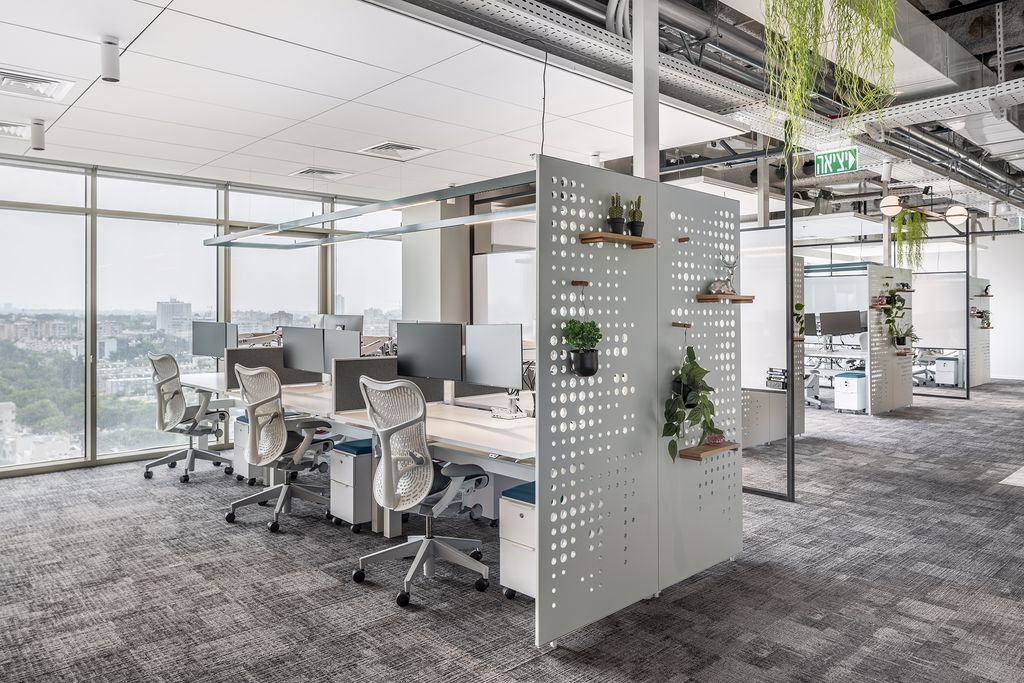
On the technical side, he described an insistence on Revit-based 3D planning and BIM coordination. In many projects, Raz Management & Engineering also introduces an additional “superposition” consultant working alongside MEP professionals to detect and prevent conflicts in planning before they become costly corrections in execution.
Locking the Budget Without Killing Flexibility
Boaz Nitzan explained that budget certainty starts with highly detailed design and a precise scope definition, but leaves room for modular choices within agreed constraints. Clients can still make finish and material selections during planning, as long as decisions stay within the budget envelope.
If the detailed planning phase shows the project trending above budget, Raz initiates a structured value engineering process with the architect and client, presenting approved substitutions to return the plan to the original target. Budget changes occur only when the client chooses to add scope after the budget is sealed, in which case adjustments are documented and approved, including schedule impact.
Scheduling Backward From Occupancy and Managing the Critical Path
On scheduling, Boaz Nitzan described a disciplined method: building the schedule backward from the occupancy date using MS Project, incorporating operational tasks, and refining the cadence over time, from monthly to weekly and eventually to daily planning during execution.
He emphasized the importance of a critical path schedule, particularly for imported components with long lead times, such as HVAC units, floor-to-ceiling systems, or specialized laboratory furniture. By mapping these risks early and managing them actively, Raz Management & Engineering treats the occupancy date as a commitment rather than an estimate.
Remote Oversight for Global Stakeholders
Many international clients do not visit the site regularly, and some do not arrive at all. Boaz Nitzan described weekly Zoom progress meetings supported by tools that combine the schedule, design models, and on-site progress. In certain projects, Raz Management & Engineering also provides frequent video documentation, allowing stakeholders to track execution closely without being physically present.
Proof in Delivery: Compressed Timelines and Parallel Workflows
Nitzan shared examples where the model delivered measurable value. One project, for Biologic Design in the Science Park in Ness Ziona, required a tight schedule and imported specialized HVAC and gas systems, as well as laboratory furniture from Europe. By placing orders early during planning and maintaining end-to-end control, the project was completed on schedule, within budget, and to a high quality standard.
He also described a unique method used in certain developments: parallel work. While developers complete shell and public-area elements and work toward their required approvals, Raz begins interior fit-out on completed floors in parallel, compressing overall timelines dramatically. In select cases, this approach can bring occupancy forward by many months, delivering a significant commercial advantage to the end user.

A Strategic Solution, Not a Fragmented Service
The interview, hosted by Dafna Shahar, makes one argument consistently: clients are not only purchasing execution. They are purchasing certainty.
Raz Management & Engineering positions its integrated Design-Build model as a business tool that protects the three core risk areas global companies fear most: budget, schedule, and quality. The outcome, in Boaz Nitzan’s framing, is not simply a delivered space, but a predictable move-in date, a controlled budget, and a premium standard that holds under scrutiny.
